
 Post by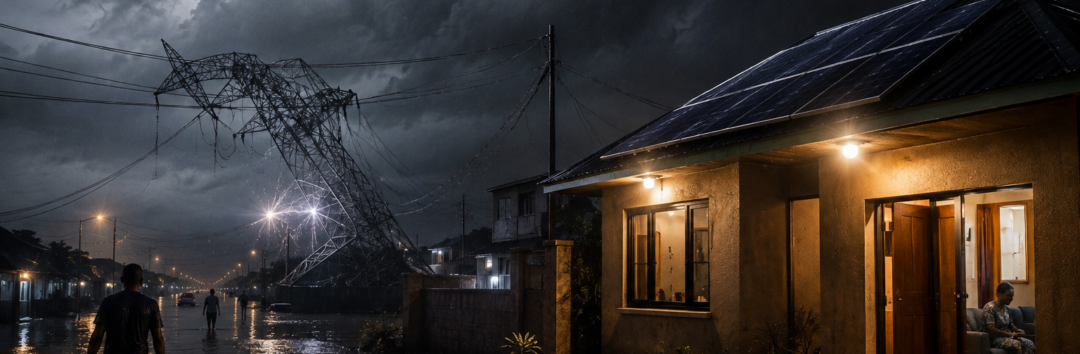
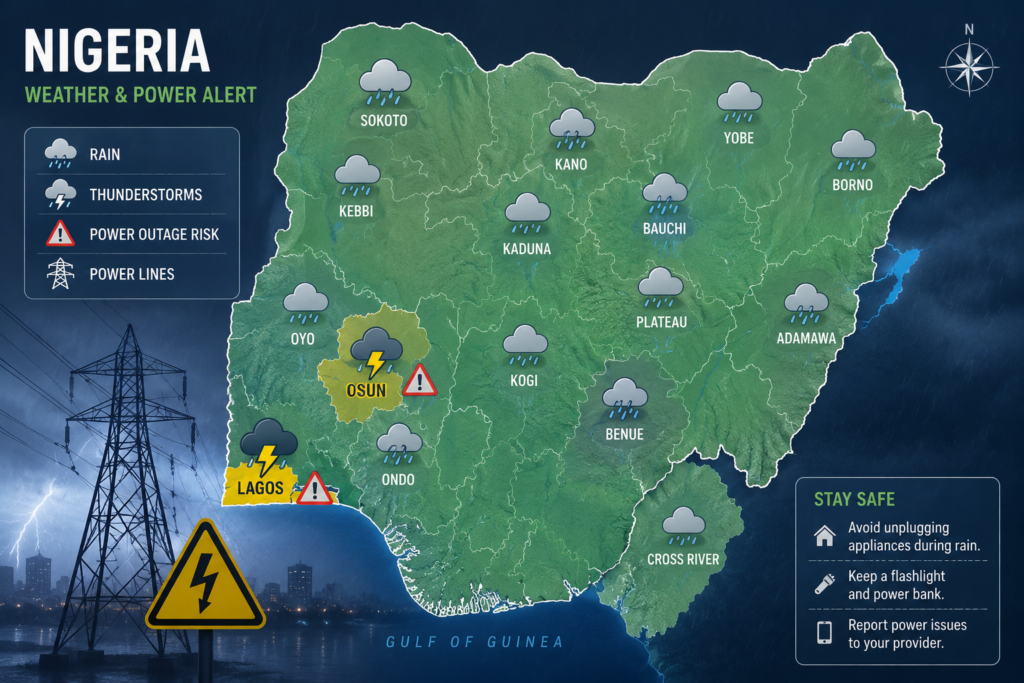
If your power has felt less reliable than usual this month, it’s not in your head. Heavy rainfall has already knocked out major transmission infrastructure in Lagos and Osun — including faults on the Oshogbo-Ikeja and Benin-Egbin 330kV lines and flood damage at the Ilerin Injection Substation — leaving whole communities without power while distribution companies work to restore supply, with no fixed timeline given. Hydrological authorities have gone further, warning that flooding risk could keep building through August and into September.
This isn’t a one-off. It’s the shape of the rainy season now, and it means the usual “wait for NEPA to sort it out” approach is a lot riskier than it used to be.
What’s actually happening to the grid
Unlike a routine outage, flood-related power loss isn’t just about a tripped line that gets reset in an hour. Substations getting submerged and transmission towers taking storm damage are structural problems — the kind that take real repair work, not a quick switch flip. When a facility like a transmission substation goes down, it can affect thousands of homes across an entire feeder line at once, and restoration can stretch on for days.
Why this is different from your average blackout
A typical outage is inconvenient. A flood-related transmission failure is a different category of problem, because:
- It tends to hit a wider area at once, not just your street.
- Repair timelines are genuinely uncertain, not just “a few hours”.
- It’s more likely to happen exactly when you also can’t safely leave the house.
- It can recur multiple times in a single week during peak rainy months.
What Actually Helps Here
A generator gets you through a few hours. It doesn’t get you through several days of an affected feeder line, especially with fuel logistics also disrupted by flooded roads. The households weathering this stretch of the rainy season best are the ones with:
- Battery capacity sized for days, not hours — enough reserve to cover essentials through an extended outage, not just an evening.
- Solar panels that keep recharging the system even while the grid itself stays down, so you’re not just running down a finite battery.
- Backup wired to the essentials that matter in a flood — lighting, phone charging, a fridge, and a router for checking flood alerts and news updates, not just entertainment.

A quick safety note
If flooding does reach your home, switch off electricity from a safe, dry location before attempting to enter or move through flooded areas, and avoid walking barefoot through floodwater. These situations carry real electrocution risk alongside the inconvenience of losing power.
If your current setup isn’t built for this
Rainy season blackouts aren’t going away in the next few weeks — authorities are already flagging risk through September. If your last outage lasted longer than you were prepared for, now is the time for a proper evaluation, not after the next one hits.
Get a free assessment of your home’s backup capacity at the Maektech Online Shop, or reach out for a consultation this week.