 Post by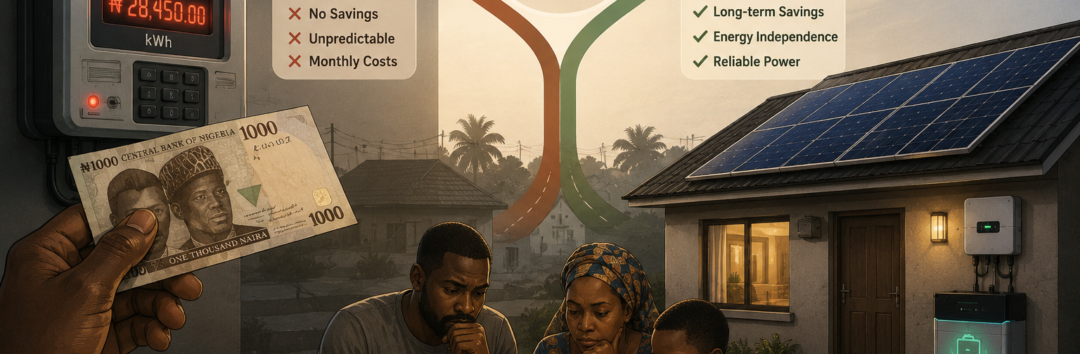
There’s been a lot of back-and-forth in the news this week. The Minister of Power floated ending the electricity subsidy regime by 2027, the government then walked it back publicly, and labour groups are pushing for a bigger structural overhaul instead of another bailout for generation and distribution companies. Meanwhile Band A customers have already seen their rate jump from roughly ₦68 to ₦225 per kilowatt-hour since the last review.
Confusing? Fair. So we sat down with one of our lead installation engineers to get a straight answer on what this actually means for households trying to plan ahead.
Q: Is a tariff hike actually coming, or is this just noise?
Q: So should people panic and rush to install solar?
Q: What’s actually within a homeowner’s control here?
Three things, really: how much of your usage depends on the grid, how much depends on fuel, and how much is genuinely independent. Most Nigerian homes are still almost entirely in the first two categories. Shifting even part of your daily usage — lighting, fans, the fridge, chargers — onto a solar and battery system moves it into that third, independent category, regardless of what NERC decides next.
Q: What about people in Band B, C, D, or E who are still subsidized — does this affect them?
The subsidy removal talk explicitly named those bands as the next phase, even if it’s currently paused. If it’s you, the honest answer is: this is the calmest time to plan, before it becomes urgent.
Q: If someone wants to start small, what’s a realistic first step?
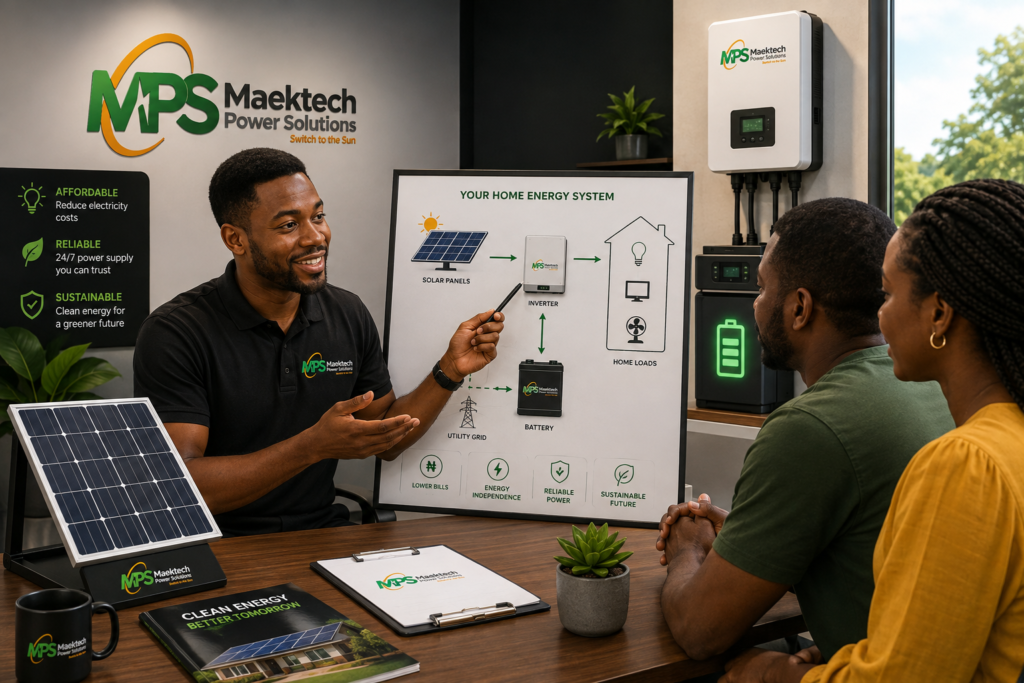
A proper load assessment, not a guess. We look at what you actually run day to day, figure out what portion makes sense to move onto solar and battery first, and size a system around that instead of trying to replace the grid entirely on day one.
The bottom Line
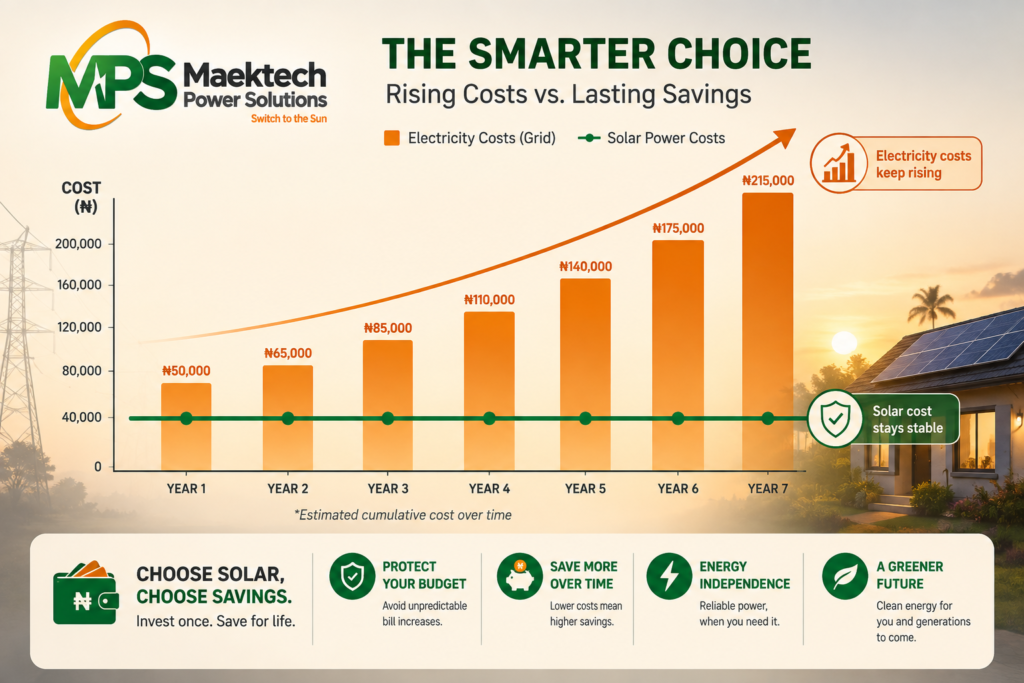
Tariff policy is genuinely unpredictable right now, and that’s exactly the point — planning your power around certainty you don’t have is a losing bet. What’s not unpredictable is that a well-sized solar and battery system quietly reduces your exposure either way.
If you’ve been waiting for the “right time” to look into this, a subsidy debate playing out in the news is as good a nudge as any. Get a free load assessment at the Maektech Online Shop, or reach out to speak with an engineer directly.