

 Post by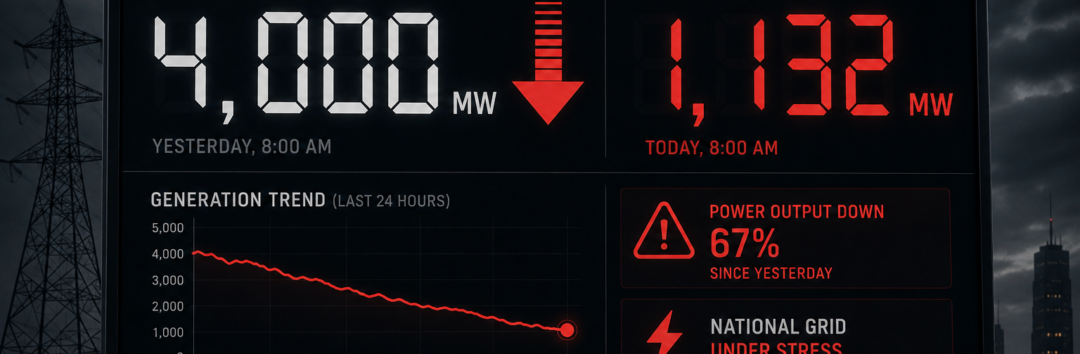
Last Saturday night, national electricity generation dropped to 1,132.02 megawatts at 8:30pm, triggering a partial grid collapse. Distribution companies across the country began load shedding almost immediately, with Eko Disco citing “low allocation from the grid” in its customer notice. It’s the first major grid disturbance since Joseph Tegbe took over as Minister of Power in June — not exactly the start anyone was hoping for.
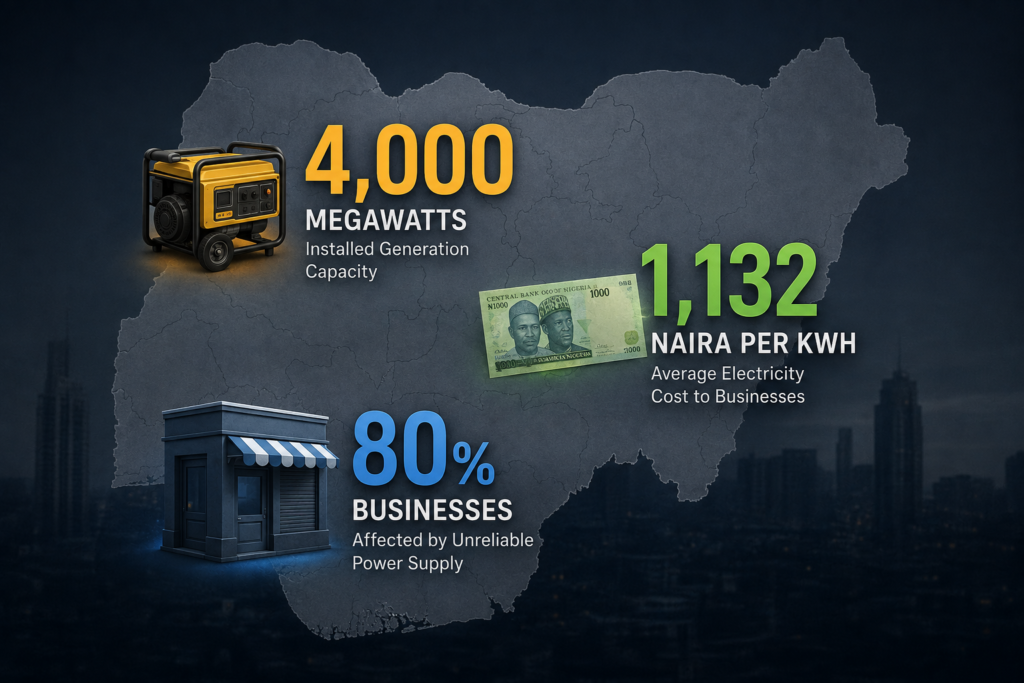
Numbers like “1,132MW” can feel abstract until you translate them into what they actually mean for the people living through them. So here’s the breakdown.
2,500MW
The amount of generated power that’s regularly wasted every single day, according to the Association of Power Generation Companies — not because it isn’t produced, but because the grid can’t evacuate it to where it’s needed. That’s more than double what actually reached the country during Saturday’s collapse, sitting stranded on the wrong side of a bottleneck.
85 million
₦5 Billion
What the Nigerian Independent System Operator estimates transmission inefficiencies cost the sector every single day. That’s money leaking out of the system regardless of whether the grid is up or down.
3%
The share of annual sales that outages cost Nigerian firms, according to the African Development Bank’s 2026 African Economic Outlook. It’s not a rounding error for a small business — it’s the difference between a good year and a bad one.

₦3,000 out of ₦4,000
What a small tailor earning ₦4,000 a day can end up spending on generator fuel alone, according to the APGC’s own account. That’s 75% of a day’s income spent just keeping the lights on — before rent, materials, or anything else.
70.7%
The share of Nigerian businesses forced to own or share a generator just to function day to day, per the same AfDB report. For most, backup power isn’t a convenience. It’s the actual infrastructure the grid was supposed to be.
The pattern behind the numbers
None of these figures are new this week — they’re the everyday backdrop that a headline like “grid collapses to 1,132MW” briefly makes visible. The stranded capacity, the daily losses, the generator dependency: all of it was already there before Saturday night, and all of it will still be there after this particular collapse gets patched over.
What actually changes the math for a household
A solar and battery system doesn’t fix the national grid’s evacuation bottleneck or the sector’s ₦5 billion daily transmission losses. What it does is take your household out of the part of that equation you were never going to control anyway — moving you from “waiting on grid allocation” to “generating and storing your own,” on a system that keeps working whether NISO’s dashboard says 1,132MW or 5,000MW.
Get a free load assessment at the Maektech Online Shop, or reach out for a consultation. The next collapse isn’t a question of if — it’s a question of whether your home notices.