
 Post by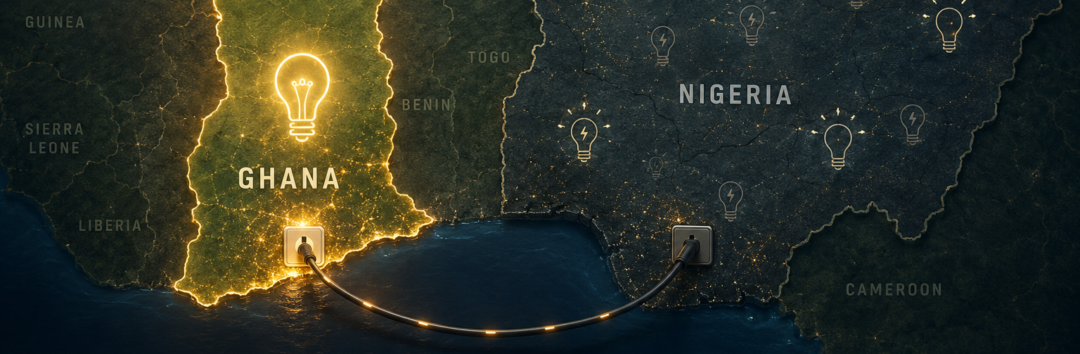
Ghana’s Energy Minister said this week that his country wants to become West Africa’s energy hub — generating enough surplus power to export to neighboring economies. Ghana already sends electricity to Togo, Benin, Côte d’Ivoire, and Burkina Faso. Nigeria, with over 200 million people and one of Africa’s largest electricity markets, is now openly named as the next opportunity.
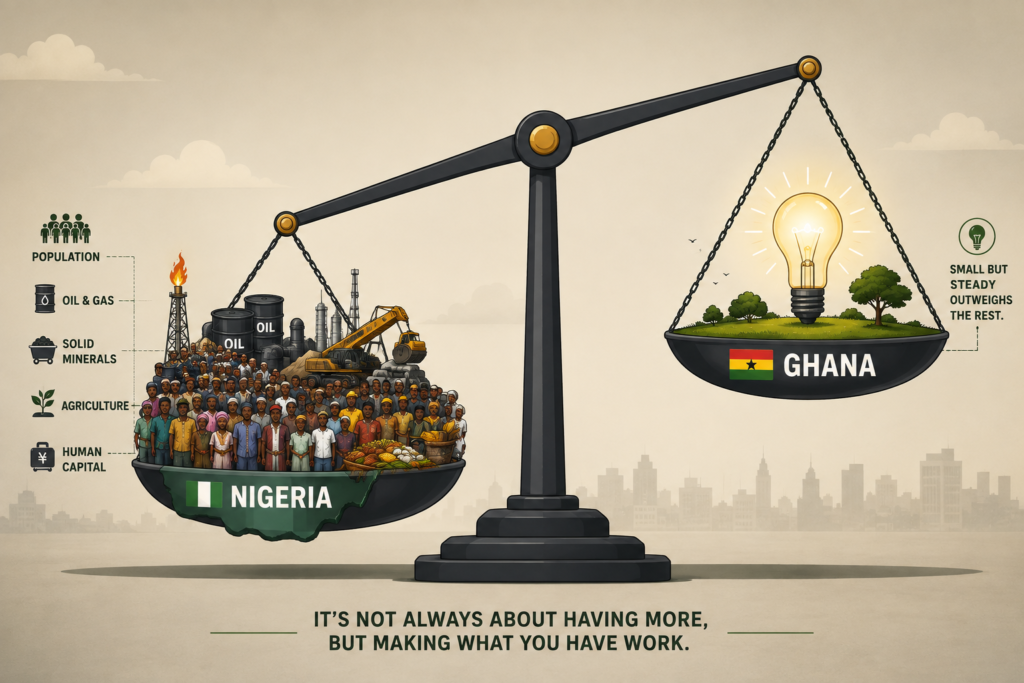
Sit with that for a second. Nigeria — Africa’s biggest economy, its largest oil and gas producer, home to more installed generation capacity on paper than almost anywhere on the continent — is being talked about as an export market for a country roughly a twelfth its size.
The same Week, For context
This isn’t happening in a vacuum. The very same week, the Federal Government and Lagos State jointly announced a plan to bring 3,500MW of new supply to Lagos alone — because the city currently receives less than 1 gigawatt from the national grid despite the transmission network having roughly 3.5GW of wheeling capacity sitting unused. That’s not a generation problem. That’s a “we built the pipe but can’t fill it” problem, in the country’s own commercial capital.
Nigeria doesn’t lack power on paper. It lacks power that reliably reaches homes.
Why this matters more than it sounds like it should

What Doesn’t wait for any of this to resolve
Cross-border power trade, a 3,500MW Lagos boost, a 6,000MW year-end national target — these are all real plans, and some of them may even land on schedule. But “may land on schedule” has been the story of Nigerian power targets for years now, and none of them change what happens in your house tonight if the grid trips.
A household solar and battery system doesn’t care whether the extra capacity comes from a new Lagos substation, a Ghanaian transmission line, or neither. It generates and stores its own supply, on your roof, regardless of how any of these announcements play out.
The bottom Line
Whether Nigeria ends up importing power from Ghana or finally closes its own transmission gap, that resolution is measured in years. Your evenings don’t have to wait for it.
Get a free load assessment at the Maektech Online Shop, or reach out for a consultation. Let the big plans play out on their own timeline — just make sure your home isn’t depending on them to do it.