 Post by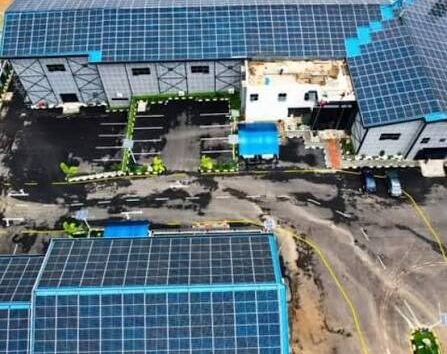
Understanding Solar Investment Costs in Nigeria
Investing in solar energy in Nigeria has shifted from a luxury to a strategic economic decision, especially given the volatility of the national grid and rising fuel prices. However, making the switch requires a clear understanding of the upfront financial commitments and available funding avenues.
1. Initial Costs of Solar Panel Installation
The upfront cost of a solar installation is typically the highest hurdle for consumers. These costs are generally broken down into four main components:
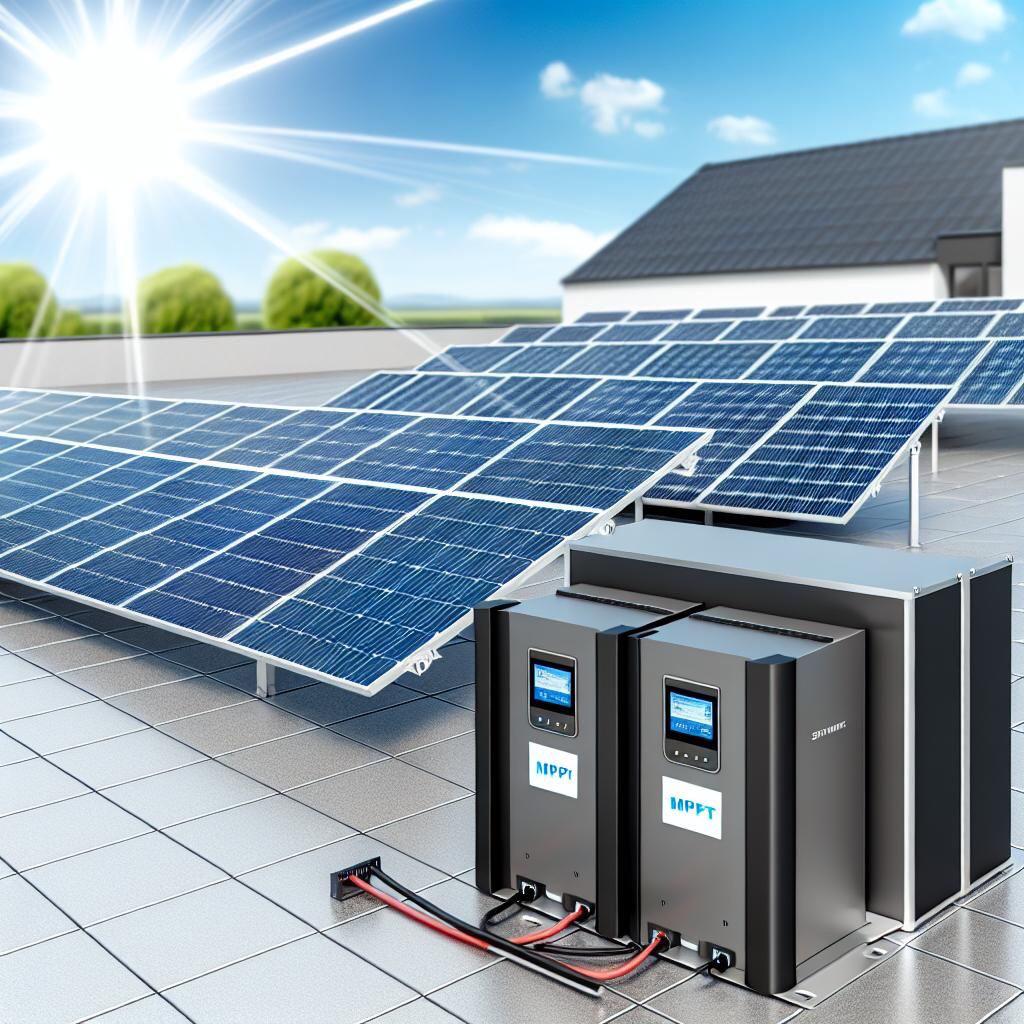
- Hardware: This includes the solar panels (photovoltaic modules), deep-cycle batteries (Lithium-ion or Tubular Gel), and a high-quality inverter (pure sine wave).
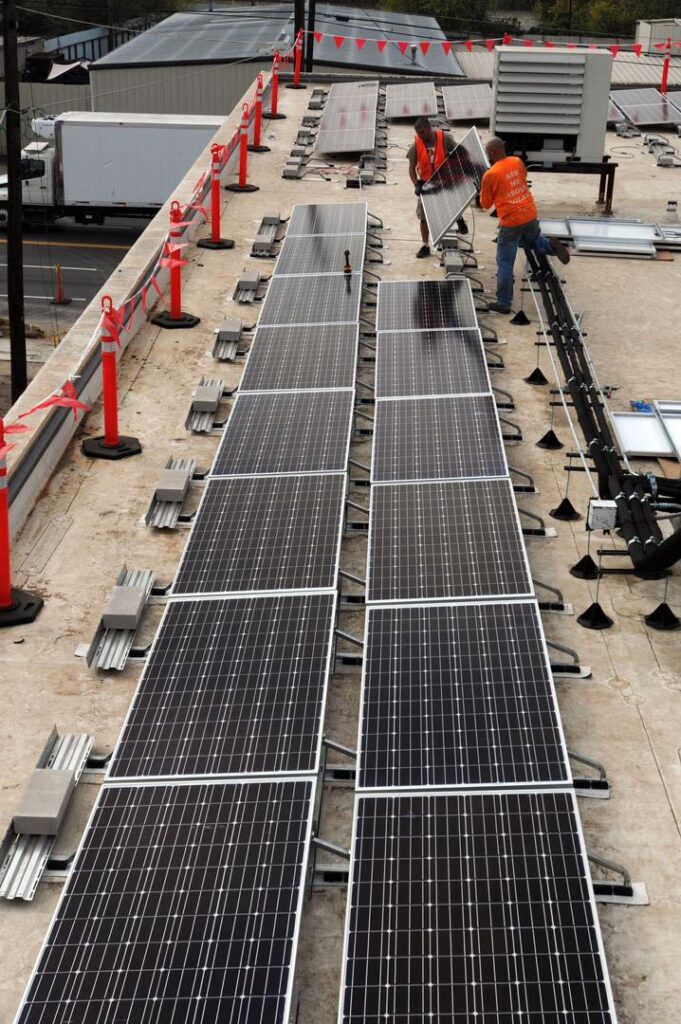
- Balance of System (BOS): This covers the mounting structures, surge protectors, changeover switches, and heavy-duty cabling.
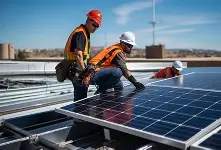
- Installation & Engineering: Professional fees for site assessment, system sizing, and safe deployment.
- Capacity Needs: Costs scale based on load. A small apartment running basic appliances (lights, fans, TV) requires a modest 1kVA–2kVA system. In contrast, a large home or office running air conditioners, pumping machines, and refrigerators requires 5kVA to 10kVA+ systems, significantly increasing the initial price tag.
2. Financing Options Available in Nigeria
To bridge the gap created by high initial costs, the Nigerian market has developed several flexible financing models:
- Solar-as-a-Service (SaaS) / Power Purchase Agreements (PPAs): Customers do not own the equipment. Instead, a solar provider installs the system and charges the user a fixed monthly fee or a metered rate for the electricity they consume.
- Rent-to-Own / Lease-to-Own: This popular “Pay-As-You-Go” (PAYG) model allows consumers to make an initial deposit followed by fixed monthly installments over 12 to 36 months. Once the final payment is made, ownership of the system transfers fully to the customer.
- Commercial Bank Solar Loans: Several Nigerian commercial banks partner with renewable energy companies to offer specialized retail loans for solar acquisition. These often feature slightly lower interest rates and longer repayment terms than standard personal loans.
3. Government Incentives and Subsidies
The Nigerian government, alongside international development partners, has introduced initiatives to drive renewable energy adoption:
- The Nigeria Electrification Project (NEP): Managed by the Rural Electrification Agency (REA) and funded by the World Bank and African Development Bank (AfB), this program provides performance-based grants and subsidies to solar developers to lower the retail cost of solar home systems in underserved areas.
- Import Duty Waivers/Reductions: While implementation can fluctuate, policies exist aimed at lowering customs duties on imported renewable energy components (like solar panels) to keep market prices competitive.
Evaluating Long-Term Savings
While the initial investment can seem steep, the financial narrative changes completely when evaluating the long-term returns on investment (ROI).
1. Pre- vs. Post-Solar Monthly Energy Bills
The financial relief of transitioning to solar becomes apparent almost immediately on a monthly balance sheet:
- Pre-Solar: Consumers face erratic electricity grid bills heavily impacted by recent tariff hikes (such as Band A tariff adjustments), alongside the recurring, unpredictable costs of buying fuel.
- Post-Solar: Monthly grid bills drop drastically, as the grid is relegated to a backup role to top up batteries on cloudy days. In optimal setups, the ongoing monthly utility cost approaches zero.
2. Savings from Reduced Fuel Expenses
For most Nigerian households and businesses, the heaviest financial drain is running petrol or diesel generators.
- The Zero-Fuel Advantage: Solar systems require no fuel. By replacing or drastically reducing generator runtime, users eliminate daily fuel purchases, engine oil changes, filters, and mechanical repair costs.
- Inflation Insulation: As fuel prices fluctuate due to subsidy removals and currency dynamics, solar users are insulated from these volatile market spikes.
3. Cost Savings Over a 5-10 Year Period
When viewed as a long-term asset, a solar system delivers substantial financial returns:
| Metric | Years 1–3 (The Payback Period) | Years 4–5 | Years 6–10+ |
| Financial Status | System pays for itself through eliminated fuel costs and reduced grid bills. | Complete “free” energy generation; net-positive savings achieved. | Continued free power; possible minor expense for battery replacement. |
| Component Lifespan | All components operate at peak efficiency under warranty. | Inverters and panels continue running seamlessly. | Premium panels (lasting 25 years) remain highly efficient. Lithium batteries easily cross the 10-year mark. |
Over a 10-year horizon, the cumulative savings from avoiding generator fuel and high grid tariffs usually equal multiple times the original cost of the solar installation, making it one of the most secure and high-yielding investments available in the current Nigerian economic climate.
Economic Benefits of Solar for Businesses
For Nigerian enterprises, power generation has traditionally been one of the largest operational bottlenecks. Transitioning to solar energy transforms this recurring liability into a predictable asset.
1. Reducing Operational Costs
- Decoupling from Diesel and Petrol: Running heavy-duty diesel generators can cost businesses thousands of dollars monthly in fuel and frequent maintenance cycles. Solar drastically offsets daily fuel reliance, shielding operational budgets from volatile fuel price hikes.
- Mitigating High Grid Tariffs: With the continuous upward adjustments of grid tariffs (such as Band A classifications), relying purely on utility power creates financial unpredictability. Solar offers a fixed, on-site energy cost that stabilizes overheads.
- Eliminating Downtime Expenses: Unreliable power leads to missed deadlines, damaged equipment from voltage fluctuations, and idling staff. A solar-plus-storage setup ensures seamless operational continuity, maximizing productivity.
2. Real-World Case Studies
- Iponri Market, Lagos: This major commercial cluster, housing thousands of retail and artisanal shops, successfully integrated stand-alone solar systems via clean energy initiatives. Traders who previously spent large sums daily on petrol to run small generators saw immediate savings, allowing them to reinvest in stock and fulfill customer orders on time.
- Commercial & Industrial (C&I) Implementations: Major financial institutions, logistics hubs, and manufacturing plants across Nigeria utilize hybrid solar setups engineered by developers like Daystar Power. Many of these entities leverage Solar-as-a-Service (SaaS) models, cutting their baseline energy costs by 20% to 30% from day one without any upfront capital investment.
3. Return on Investment (ROI) for Nigerian Businesses
- Payback Horizon: For businesses opt for an outright cash purchase, the capital payback period typically spans 3 to 6 years.
- Asset Lifespan: Once the initial system cost is amortized, the energy generated for the remaining lifespan of the panels (up to 20–25 years) is virtually free.
- Internal Rate of Return (IRR): Commercial solar investments in the region frequently achieve an IRR of 15% to 25%, heavily outperforming standard fixed-income financial instruments in the local market.
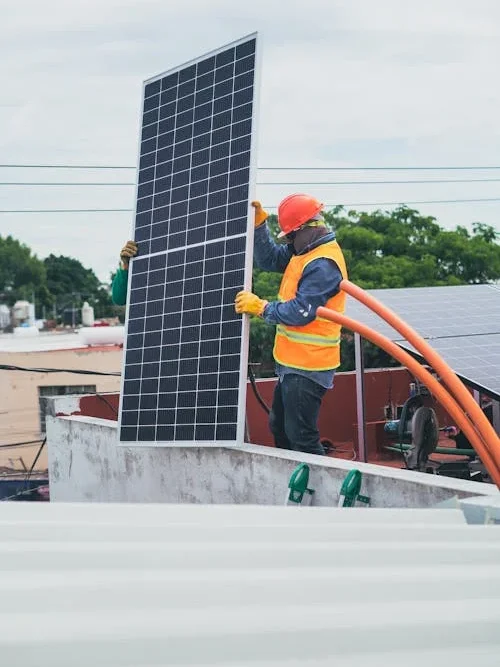
Environmental and Social Impact of Going Solar
Beyond individual balance sheets, the mass adoption of solar energy plays a foundational role in reshaping Nigeria’s socio-economic landscape.
1. Reducing Dependence on Fossil Fuels
- Displacing “Micro-Emissions”: Millions of small petrol and diesel generators across Nigerian cities generate a thick canopy of urban smog and noise pollution. Displacing these generators with clean solar setups yields immediate localized reductions in carbon monoxide, particulate matter, and nitrous oxides.
- Decarbonization Metrics: Scaled market installations significantly lower carbon footprints. For example, the replacement of just 200 small generators in a localized market environment can save close to 900 tonnes of $CO_2$ equivalent annually.
2. Social Benefits and Job Creation
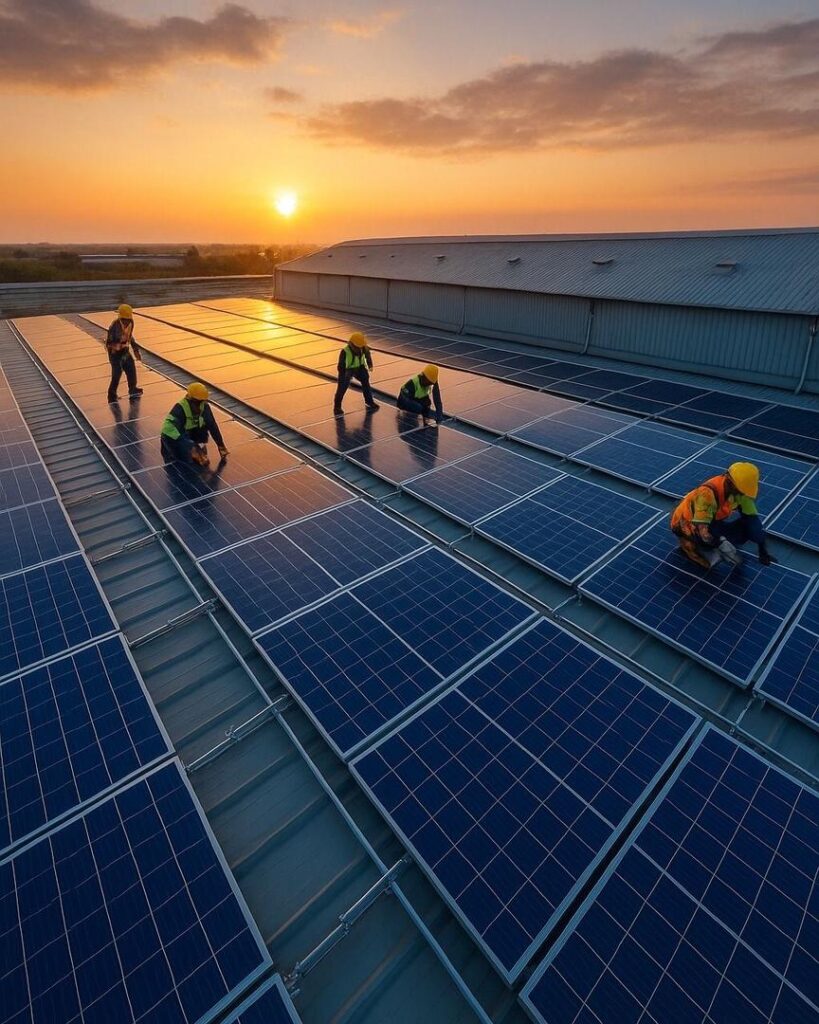
- Technical and Vocational Employment: The expanding solar value chain requires localized talent for site engineering, system sizing, structural installation, and long-term maintenance infrastructure.
- Last-Mile Entrepreneurship: Social enterprises (such as Solar Sister) have proven that clean energy models can empower women and youth in peri-urban and rural areas. By training locals to distribute and service small solar products, communities build resilient, independent retail economies.
3. Contributing to National Energy Independence
                     [ Traditional Power Grid ]
                Erratic Supply + High Tariff Inflation
                                 │
                                 ▼
                     [ The Decentralized Fix ]
               Distributed Solar Generation (Rooftop)
                                 │
                                 ▼
[ Decentralized Grid Relief ] ───┴─── [ Macro-Economic Stability ]
• Reduces peak load strain           • Lessens foreign exchange drain
• Minimizes grid collapse risks       • Insulates productivity from grid shocks
- Alleviating Grid Pressure: Distributed solar generation (rooftop solar) offsets industrial demand on the national grid during peak daylight hours. This decentralized relief stabilizes macro-utility performance and reduces systemic grid failure risks.
- Macro-Economic Shielding: Relying on imported fuel drains significant foreign exchange reserves. Moving commercial ecosystems to solar means business productivity becomes insulated from international oil shocks, strengthening national economic sovereignty.
To explore a real-world perspective on this transition, this Solar Energy Adoption Report highlights how Nigerian businesses and homes are actively turning to solar installations to insulate themselves from current energy and fuel crises.
Maektech Power Solutions stands out as the ultimate plug for Nigeria’s solar needs. Maektech custom-builds advanced solar and storage systems that match both your energy goals and your budget. By prioritizing premium components, professional engineering, and innovative modular plans, they effectively bridge the gap between high upfront costs and true energy independence. Stop burning money on expensive generator fuel and unpredictable electricity tariffs. Switch to a cleaner future today by visiting Maektech Power Solutions.