
 Post by
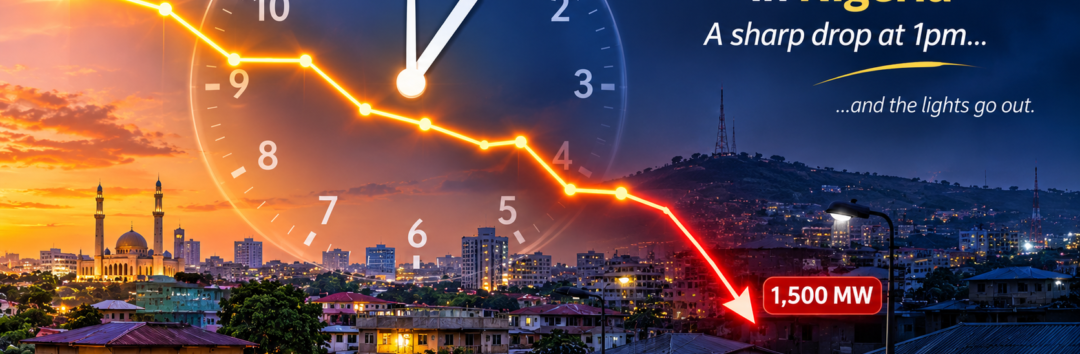
On Monday, October 19, a Nigeria grid disturbance cut national generation by 81% in about an hour. National generation fell from 3,647MW to 675MW, and by evening the grid had only clawed back to 2,150MW. The National Independent System Operator (NISO) says the problem hit only part of the grid and rejects claims of a full national collapse. Households and businesses felt it anyway.
Here is how the day unfolded, hour by hour, and what it tells you about planning your own power.
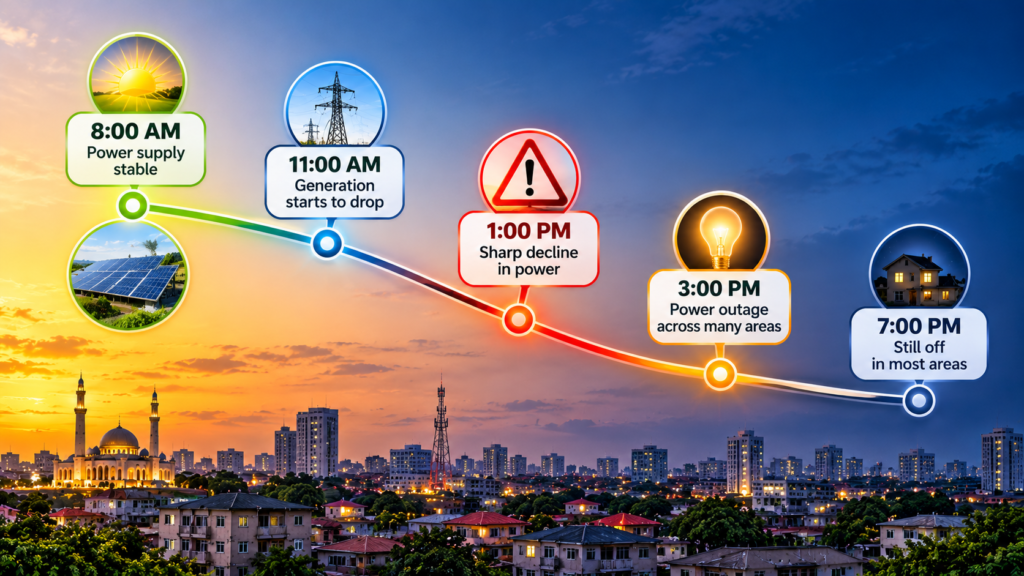
6:00am: 4,458MW, a normal-looking Morning
NISO data shows generation at 4,458MW at six o’clock. That’s modest for a country of more than 200 million people, but the day started without any sign of the crash to come.
12:00pm: 3,647MW, already sliding
By noon, supply had already slipped to 3,647MW, which is 811MW below the morning level.
12:40pm: multiple trips on the 330kV network
NISO says the incident began at about 12:40pm, when the 330-kilovolt transmission network suffered multiple trips. When high-voltage lines trip, the plants that feed them can lose their route to the load, and supply drops fast.
1:00pm: 675MW, the low point
Within the hour, supply bottomed out at 675MW. That’s a drop of 2,972MW, or 81.5%, in roughly sixty minutes. The number of plants supplying the grid fell from 21 to 12. Abuja Electricity Distribution Company told customers that “a grid-related challenge” had interrupted supply, while Ikeja Electric blamed lower allocations from the national grid.

5:00pm: 2,150MW, recovery stops short
NISO took corrective measures with the Transmission Company of Nigeria (TCN) and later said it had completed restoration. Yet at five o’clock, generation still sat at 2,150MW. That’s 1,475MW above the low point, but 1,497MW below noon and 2,308MW below the morning level. A grid can return to “normal operation” on paper while homes still wait for their feeders to come back.
what the timeline tells you
One Nigeria grid disturbance doesn’t prove the whole system has failed, and NISO stresses that this one was partial. But a partial failure that removes 81.5% of supply in an hour shows how little cushion the grid carries. A P.M. News editorial put it plainly this week: “Nigeria cannot build a strong economy on an unreliable electricity supply.” It also demanded that authorities publish clear findings after every major disturbance, and that investment in transmission go beyond announcements.
Those fixes matter, and they will take time. Your Monday afternoon doesn’t have that time.
what to do before the next one
You can’t control 330kV lines, but you can control what happens when they trip. A solar and battery system switches over without waiting for NISO’s statement, and it keeps your fridge, router, and lights running through the hours when the grid sits at 675MW or 2,150MW. Size it for the loads you can’t afford to lose, and add capacity later.
Get a free load assessment at the Maektech Online Shop, or reach out for a consultation. The next trip is coming. Make sure your home doesn’t notice it.