
 Post by
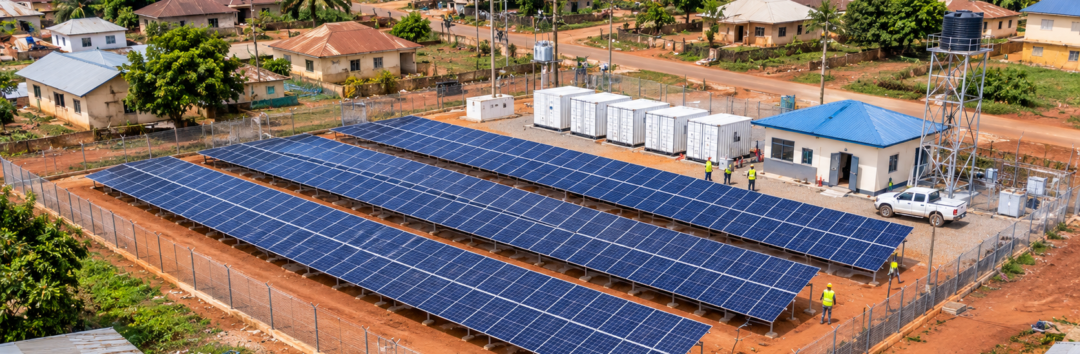
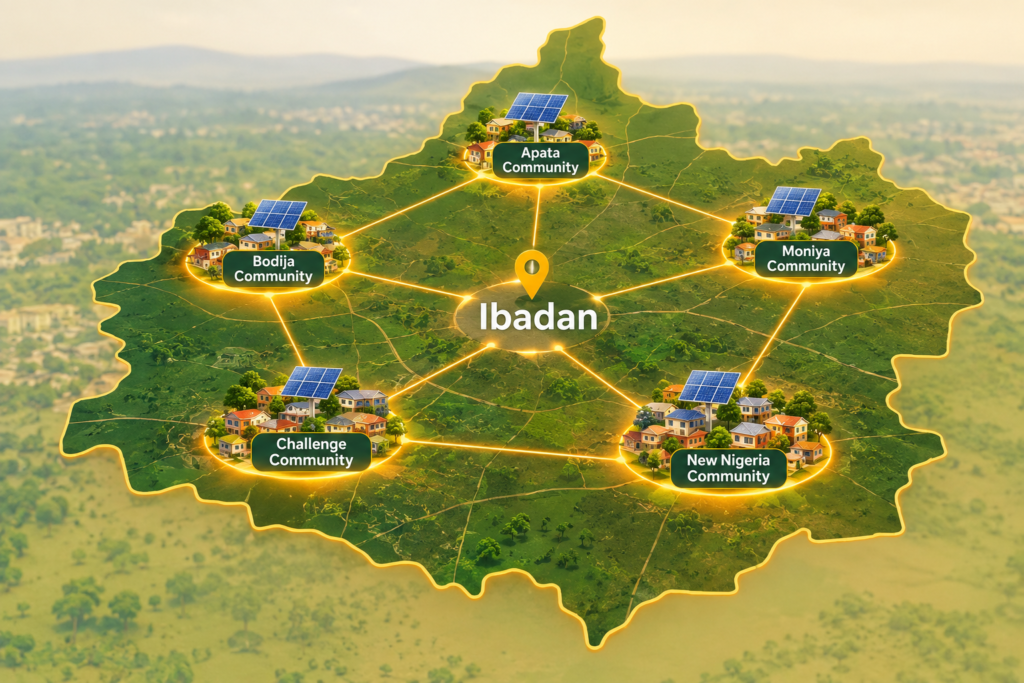
This week, Power Minister Joseph Tegbe flagged off construction of a solar mini-grid in Nigeria that links five communities around Ibadan in Oyo State. Five interconnected hybrid mini-grids will add 17.7MW of solar capacity, backed by battery storage, to homes and businesses in Akinyele, Ido, Ibadan North, Egbeda, and Lagelu. The same day, Tegbe told Nigerians to disregard talk of a tariff hike: “there is no plan to increase electricity tariffs.”
The tariff line grabbed the headlines, but the engineering choice deserves more attention. When the government wanted to improve supply for these communities, it chose solar panels and batteries.
what the solar mini-grid in nigeria actually builds
The five mini-grids carry the names Bola, Jiboye, Molade-Adelubi, Ogo Oluwa, and Sooko-Elega. Paras Energy and Natural Resources Development Limited will develop them, the World Bank is financing the work, and the Rural Electrification Agency (REA) and Ibadan Electricity Distribution Company support the project. Reports put the battery storage at 17.74MWh, and one report says the network will serve 22,597 customers. The stated target is at least 20 hours of electricity a day.
why the generator comes up in the speeches
Officials listed several benefits: better access for homes and businesses, longer business hours, and more jobs and investment. One benefit stands out for ordinary households: less reliance on petrol and diesel generators. A government that builds a solar mini-grid to cut generator use signals that it sees the generator as a problem to reduce, not a permanent fixture.
the gap between 20 hours and 24/7
Tegbe says the government’s commitment is “24/7 power.” The mini-grid’s stated target is at least 20 hours a day. Both numbers sound good next to what many Nigerians get today, but they aren’t the same promise. Four hours of daily gap is still four hours of darkness, and that gap shows why batteries matter. A system with storage keeps your lights on through the hours the supply drops.
the home-served version of the same recipe
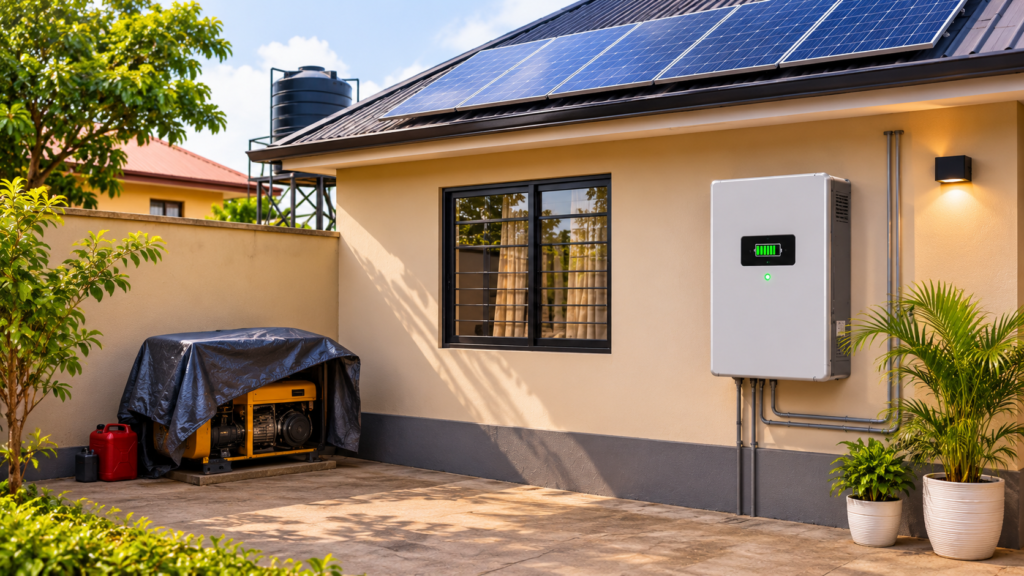
A mini-grid and a household system use the same ingredients: solar panels to generate, batteries to store, and a controller that keeps the supply steady. The difference is scale and timing. A mini-grid for five communities needs a developer, financing, and a construction schedule, and the reports give no completion date. A home system can go up on your own roof in days, and you don’t need to wait for a project to reach your area.
what the tariff promise deos and deosn’t change
Tegbe’s statement matters for your bill. But it says nothing about how many hours of power you will get. A frozen tariff on a feeder that gives you six hours of supply still leaves you buying fuel for the other eighteen. Your power supply depends on the hours that arrive, not only on the price per unit.
your move
For communities that want reliable power, the government has just picked solar plus storage. You can use the same approach now, on your own timeline.
Get a free load assessment at the Maektech Online Shop, or reach out for a consultation. Ibadan’s mini-grids will come online in time. Your home can start sooner.